Contents
Updated on 30 March, 2026
Becoming a real estate agent in the UK might be easier than you think.
Real estate is an accessible career path for beginners in the UK as it doesn’t legally require formal qualifications or a license. But success depends on strong communication and negotiation skills, and most importantly, a solid understanding of the local property market.
Luckily, real estate employers in the UK are often open to hiring trainees and they also provide on-the-job training round the year. Voluntary certifications, such as the Propertymark Level 3 Award are there to your enhance credibility and improve your employability.

This guide will walk you through the steps of becoming a real estate agent in the UK and the types of real estate professions you can practise.
Here’s a step-by-step guide:
Step 1. Understand the role and the industry
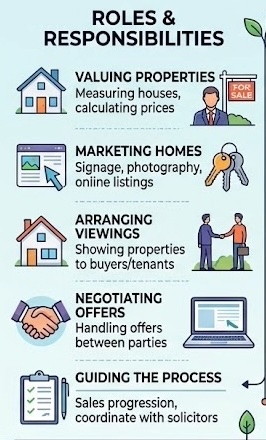
The primary role of real estate agents is to make the process of buying, selling, and renting properties smooth for real estate consumers. You’ll assist people or businesses looking to buy, sell, or rent properties in finding a suitable deal while guiding them through the legal processes. Developing and maintaining strong relationships with clients, buyers, and other contacts is essential for long-term success in this field.
As a real estate agents in the UK, you can choose to work across different sectors, such as residential, commercial, lettings, or auctioneering. The type of role you pursue will determine the skills and qualifications you need for a successful career.
Step 2. Meet the requirements and assess your skills
To become a realtor, you’ll must be at least 18 years old and have the necessary permits to work in the UK if you’re not a UK citizen. The table below explains detailed requirements and recommended steps:
| Requirement | Details | |
| Minimum age | 18 years old | You must be legally an adult to work in property transactions |
| Education | No formal degree required | Most agents enter with GCSEs or A-levels; degrees in business/property help but aren’t mandatory |
| Right to work | Legal right to work in the UK | Required for employment or self-employment |
| Background check | Clean criminal record (recommended) | Important for handling client money and trust |
| Training / qualifications | Optional but beneficial | Common certifications:• Level 2/3 Award in Residential Sales• Level 3 Certificate in Property Agency• Level 4 Diploma in Property Agency |
| Professional bodies | Not mandatory but strongly recommended | Joining adds credibility:• National Association of Estate Agents (NAEA Propertymark)• Royal Institution of Chartered Surveyors |
| Regulatory registration | Required | You must register with a redress scheme:• The Property Ombudsman (TPO)• Property Redress Scheme |
| AML compliance | Mandatory | Register with HM Revenue & Customs for anti-money laundering (AML) supervision |
| Client Money Protection (CMP) | Required (if handling client funds) | Must join a government-approved CMP scheme |
| Insurance | Strongly recommended | Professional indemnity insurance protects against legal claims |
| Skills Needed | Essential soft skills | Sales, negotiation, communication, local market knowledge |
| Experience | Entry-level roles available | Many start as trainee negotiators or assistants |
| Starting options | Employment or self-employed | You can join an agency or start your own business |
Formal education is not necessary to become a real estate agent in the UK. However, certain skills and personal qualities are essential for a successful real estate career. These include communication skills, negotiation skills, sales and marketing knowledge, and customer service.
If you feel you need to improve in any of these areas, consider taking short courses or workshops to develop these skills. There are many online and offline course options available. Choose a training school that provides all necessary materials, including digital resources, workbooks, and audio/video content. Real estate courses often cover key concepts such as property law, ethics, and sales techniques. The format or provider does not matter as much as the quality of the training you receive.
Step 3. Research the real estate market
The next step includes understanding the UK property market. The market fluctuates based on economy, government policies, and demographic changes.
Before starting applying for a real estate role, consider studying the market to understand the trends in property prices, locations, and high-demand properties. Also, knowledge of property law, especially contract law, is essential. Study the basics of legal contracts and property rights.
Step 4. Choose a real estate career path
In the UK, there are various roles in real estate and each may require slightly different skill sets. The next step is to consider which type of real estate field you want to go into. Here are the most common real estate roles:
- Residential estate agent: Focuses on helping individuals buy, sell, or rent homes.
- Commercial property agent: Deals with office spaces, retail units, industrial properties, and more.
- Lettings agent: Specialises in rental properties, managing leases, and dealing with tenants and landlords.
- Property auctioneer: Facilitates property sales via auctions, often dealing with foreclosures or quick sales.
Choosing a specialty early on can help you focus your learning and gain expertise in a specific area.
Step 5. Gain qualifications (optional but recommended)
As mentioned earlier, a formal degree is not required to become a real estate agent in the UK. However, gaining essential qualifications can set you apart from the competition. To navigate this step, you can take a real estate course and get certified.
Several training providers, such as the National Federation of Property Professionals (NFoPP) and Propertymark, offer courses in real estate and property management. Typical topics covered include property law, sales techniques, client relationships, marketing, and ethics.
You can complete most courses at your own pace and on your own schedule. You can easily fit real estate learning around other commitments. But keep in mind that thorough preparation is important for assessments to ensure you gain the most from your training. Studying independently takes a good deal of self-discipline, so it’s worth having a few strategies for staying motivated on hand to keep your progress on track.
Step 6. Gain work experience
Gaining hands-on experience in real estate will help you understand the responsibilities of an agent. If you don’t have any prior experience working in real estate, consider apprenticeships or applying for a trainee position.
Many estate agencies offer trainee or junior roles. These are the entry-level positions that provide on-the-job training on the basics of property valuations, client management, and negotiation. Real estate apprenticeships typically last between one and two years and will provide you with formal qualifications upon completion.
You may also want to consider shadowing an experienced agent to learn about their daily responsibilities and challenges. If you know someone in the real estate industry, ask if you can shadow them for some time just to understand how things work in the real estate world.
Step 7. Understand the UK property laws and regulations
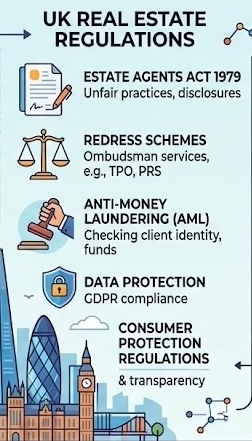
You must have a basic understanding of property laws as a real estate agent, especially around contracts, conveyancing, and property rights. If you want to navigate this with formal education, take basic or specialised property law courses. It’s also important to stay updated on legal changes as property laws and regulations frequently change in the UK. Always follow updates from the Government’s Department for Levelling Up, Housing and Communities (DLUHC) or professional bodies like RICS. Following real estate laws, rules, and administrative rules is essential, and only a person who meets the requirements can act as a real estate agent.
Step 8. Join a professional body
Joining a professional body is not a legal requirement but it can play a great role in enhancing your career prospects. Memberships in these organisations come with access to training, industry insights, and networking opportunities. Key organisations include National Association of Estate Agents (NAEA), Royal Institution of Chartered Surveyors (RICS) and Property Redress Scheme.
Joining a redress scheme is a legal requirement for running your own agency.
A typical career path might involve an applicant starting as a trainee, completing courses at a reputable school, gaining experience through apprenticeships, and then obtaining certification from a professional body. The person would then submit applications and required documents, possibly through an online account, to join professional bodies. Once accepted, they can begin working with clients and facilitating real estate transactions.
Step 9. Start working at an estate agency
Once you’ve gained the necessary real estate knowledge and entry-level work experience, it’s time to start your career at an estate agency. Most estate agents begin their careers by working for established agencies. Large national agencies (such as Foxtons or Savills) offer structured training programs, but smaller independent agencies can provide more hands-on experience.
As you gain experience, focus on building a portfolio of successful property transactions. This will help when you’re ready to take on larger roles or eventually branch out on your own.
Step 10. Specialise further and start your own agency
Once you’ve gained some experience, you may want to specialise in a specific area of real estate, such as luxury real estate, buy-to-let or international real estate.
With enough experience, you can start your own real estate agency. If you plan to go on your own, you’ll need to register as a sole trader or a limited company. You’ll also need to comply with legal requirements, such as joining a property redress scheme and following anti-money laundering regulations.
Nice to know:
- The cost to obtain relevant certifications usually ranges from £250 to £1,000.
- Agents usually earn income in the form of commissions based on successful property sales or rentals.
- During the application process for jobs or professional bodies, you’ll need to contact agencies or organisations directly, and applications are reviewed and accepted before starting work.
Why is becoming a real estate agent in the UK is much easier
Becoming a real estate agent in the UK is much more flexible compared to many western real estate markets. There is no strict requirement for a real estate pre-licensing course, no need to pass real estate licensing exams, and no state licensing exam. Instead, you can start working with an agency and learn on the job, which is similar to being a licensed real estate salesperson but without formal licensing.
In contrast, many countries require steps like submitting a completed application, passing a background check, finding a sponsoring broker, and taking a real estate salesperson exam where passing the required test and examination is crucial. Some countries also allow license reciprocity, but this does not apply in the UK.
| UK | Most western markets | |
|---|---|---|
| Education requirement | No formal degree or mandatory education required | Must complete a real estate pre-licensing course |
| Licensing | No official license needed | Must obtain a broker license or become a licensed real estate salesperson |
| Exams | No real estate licensing exams | Must pass a real estate salesperson exam or state licensing exam |
| Application process | Apply directly to agencies | Requires submitting a completed application and passing a background check |
| Work setup | Start working with an agency immediately | Requires finding a sponsoring broker before working |
| Career progression | Based on experience and certifications | Based on licensing levels and exams |
| License transfer | Not applicable | License reciprocity may allow working across regions |
Frequently asked questions
To start off in real estate, first ensure you’re a legal adult and eligible to work in the UK. Then, apply for entry level real estate jobs, take real estate courses to understand property laws, valuations, and client interactions, and network.
Unlike in some countries, the UK does not have a formal licensing requirement for real estate agents. However, if you choose to join a professional body like the NAEA, there will be costs associated with memberships (around £200 to £400 per year) and real estate training courses which can cost between £500 and £1,500.
Real estate can be a rewarding career if you have strong sales skills, people skills, and a passion for property. It offers flexibility, excellent growth potential and high income potential. However, success in real estate depends on market conditions, location, and personal drive.
Estate agents may need to work long hours, handle multiple transactions simultaneously, and deal with difficult clients or unpredictable property chains. It can sometimes be stressful, especially if you have poor time management skills.
While there are no educational barriers or licence requirements, breaking into real estate can be tough as it’s a highly competitive market. Building a reputation and developing a client base will take time and effort.
Yes, real estate remains in demand in the UK due to population growth, urban development, and the ever-present need for housing.
If you have no prior experience, start as a trainee, learn about the industry, and develop skills in sales, marketing, and customer service.
No, you don’t need a degree to become a real estate agent in the UK. However, having a background in business, marketing, or property studies can give you an edge. Vocational training through real estate courses or apprenticeships can also be beneficial.