Very soon, you won’t need a phone number to find and contact someone on WhatsApp. This could change how you run your sales process, how you connect with your leads, and manage conversations.
Let’s dive into it.
WhatsApp has always identified users and businesses through phone numbers. Even so, this approach has raised some privacy concerns, especially when users interact with businesses or unknown individuals. In response, WhatsApp is finally introducing “Usernames”.

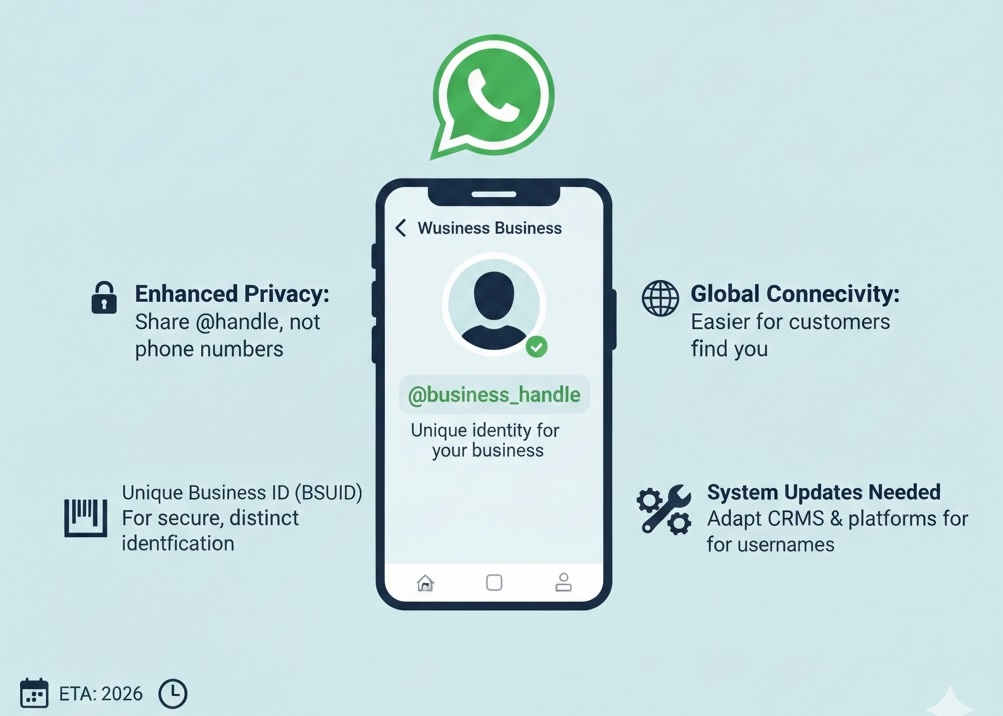
Similar to social media and messaging platforms like Telegram, WhatsApp usernames will allow users to connect with each other without sharing their phone numbers.
If you’re a business relying on WhatsApp for communications, this shift can affect lead generation, lead engagement, and CRM integrations. So what do you need to know and how do you prepare your account for a smooth transition?
This article will explain everything you need to know about WhatsApp Usernames, what to expect, and when it will be released.
What are WhatsApp Usernames?
Usernames will be the new identity for WhatsApp users very soon. Just like in social networks or messaging platforms like Telegram, a WhatsApp Username will function as one’s public-facing identity. This will not remove phone numbers, which will still remain a backend credential for verification, but users will have more control over who to share their private number with.
Usernames may be expected to be unique across WhatsApp to prevent duplication or impersonation at the platform level.
Users and businesses will be able to message each other using usernames without first saving a phone number to their contacts. Phone numbers will still exist underneath the system, each tied to a specific username, but they will no longer be the default visible identifiers.
How WhatsApp Usernames are expected to work

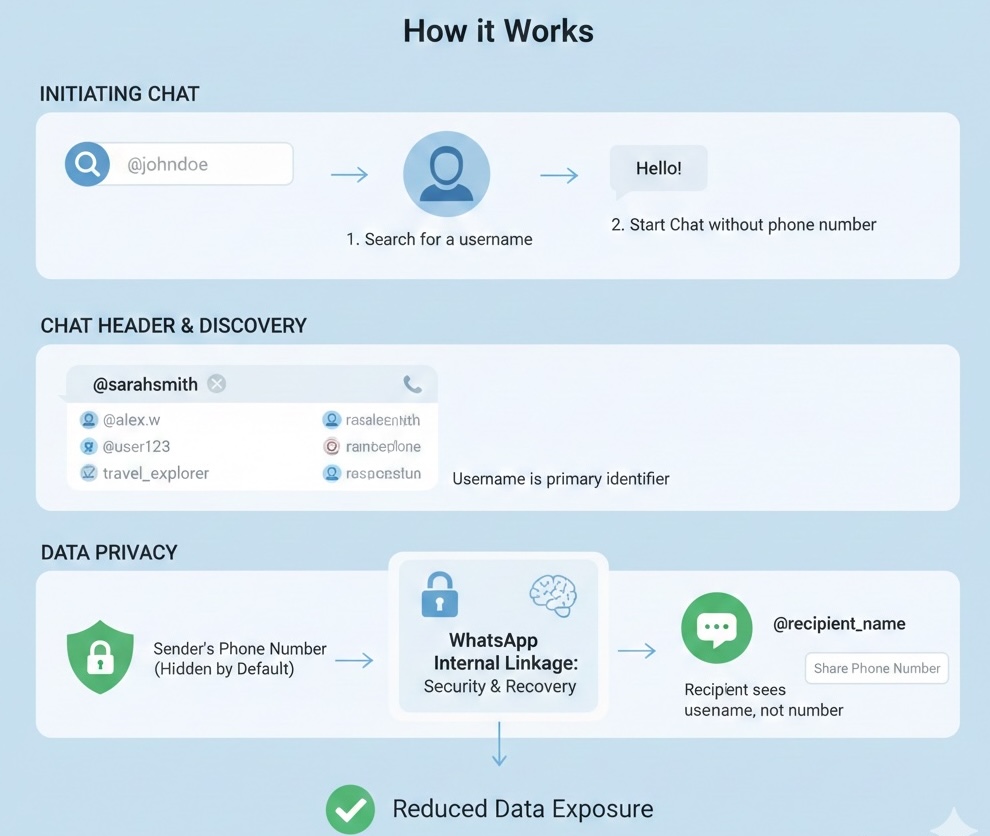
When a username is enabled, it becomes the primary identifier shown in chat headers, search results, and contact discovery. Users can initiate conversations by searching for a username on WhatsApp. You’ll no longer need to save a phone number to contact someone on WhatsApp.
With usernames implemented, the recipient of a WhatsApp message will not automatically see the sender’s phone number unless the sender decides to share it. WhatsApp maintains the link between username and phone number internally for security, abuse prevention, and account recovery. This feature is also expected to reduce unnecessary exposure of personal data.
Release dates
As of now, WhatsApp Usernames are not available to the public. WhatsApp is expected to introduce the feature gradually just like WhatsApp Coexistence. Industry reporting hints at early to mid-2026 as the main rollout period.
If you’re a WhatsApp API user, you may have already been informed about the deadlines to support new identifiers before mid-2026. Early rollout phases may prioritise personal accounts before expanding fully to business and API-based use cases. As a business account user, you may need to comply with the changes by June 2026.
What changes for WhatsApp Business accounts

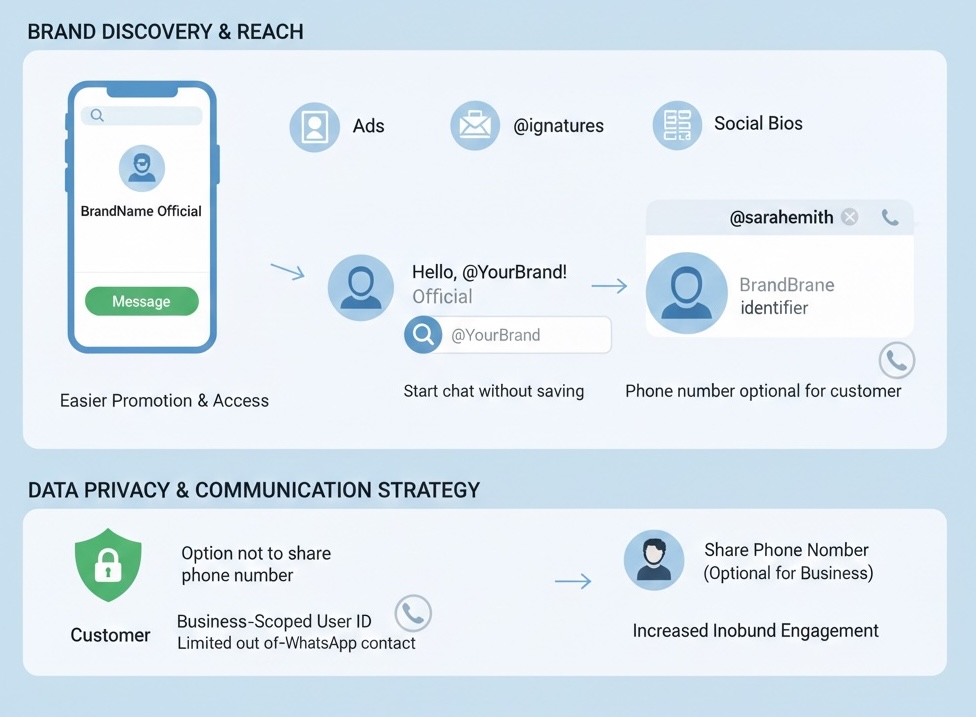
With usernames, WhatsApp Business accounts will be able to choose names that reflect their brands. Displaying phone numbers as primary contacts will become optional. And customers can start conversations with you without storing your number in their contacts.
Usernames will also help you promote your brand better. You can make your business profiles more recognisable and trustworthy through consistent branding. Additionally, WhatsApp Usernames will make it easier to get your audiences to get in contact with you. As a brand, you can easily include your WhatsApp handles in ads, email signatures, and social bios, rather than a string of numbers that is harder to remember. As a result, WhatsApp could become more accessible to live chat or social DMs. As a business, you may see increased inbound engagement.
Your WhatsApp phone number will still exist and you would still be able to share your number with your customers. However, customers will have the option not to share their phone numbers with you. This may affect your communication strategy, since you won’t be able to text, call, share their number, or contact them on platforms outside of WhatsApp. There will be a unique Business-Scoped User ID for each user you interact with.
So what is a Business-Scoped User IDs (BSUID)?

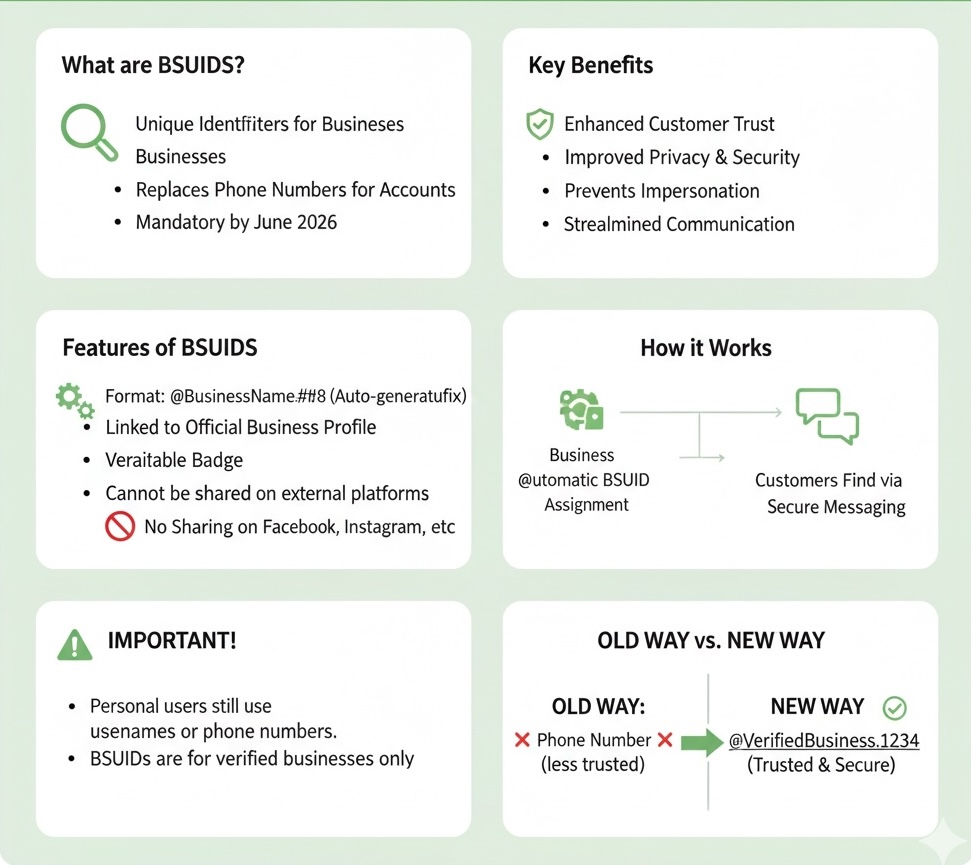
Business-Scoped User ID is a unique identifier for a user that is specific to their interaction with a particular business. BSUIDs will replace phone numbers as the primary way businesses identify users.
The same user will have a different ID for each unique business they interact with. As a business, a BSUID will help you recognise returning users even if their phone numbers are hidden. This means you’ll not be able to share a customer’s information to external people or feed it into other systems like SMS. This will prevent cross-business tracking, improve privacy, and allow businesses to maintain conversation history and continuity.
How Usernames might impact WhatsApp Business API and Integrations
Most WhatsApp integrations currently assume phone numbers as the core identifier for users. With usernames and BSUIDs, integrations will need to support alternative identifiers in message events and webhooks.
CRMs will need to map conversations to BSUIDs instead of relying on phone numbers. Automation rules, chatbots, and routing logic must adapt to Usernames (or BSUIDs). Your systems should update integrations to avoid breaking automated workflows. If you’re using a CRM, ask support about these integrations.
Privyr has already implemented the necessary changes to its WhatsApp integrations. If you’re a Privyr user, you won’t need to make any manual changes. The tool will update itself as the usernames feature rolls out.

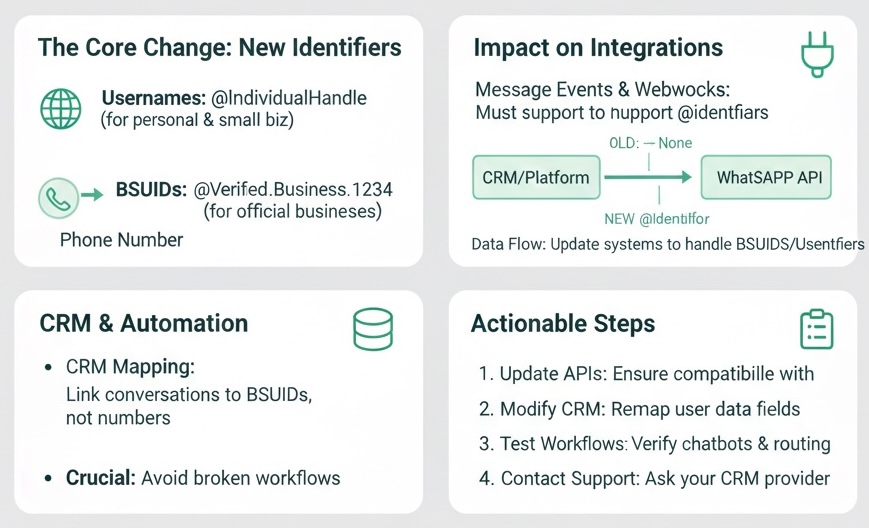
How to prepare for these changes as a business on WhatsApp
With WhatsApp Usernames, customers can choose not to share their phone numbers at all. Based on only BSUIDs, you won’t be able to call them, send them an SMS, or contact them outside of WhatsApp. You’ll need to adapt your communication strategy to this change.
Updating your tools in line with WhatsApp Usernames rollout boils down to the tool you’re currently using. Many WhatsApp-first CRMs or lead engagement tools will most likely update their WhatsApp integrations, so you won’t need to make any changes on your own.
However, it’s always good to be aware of a few things to make necessary changes, just in case your tools don’t support the updates or become obsolete. For instance, your systems that store WhatsApp contacts will now have to support non-phone-number identifiers as well. Databases may require updates to avoid dependencies on phone numbers.
More importantly, your team should clearly know how to recognise users with new Business-Scoped User IDs. Furthermore, documentation and compliance processes should include the new identifier model. We highly recommend you plan for a transition period where phone numbers and usernames coexist.
Common misconceptions
As WhatsApp plans to introduce usernames, there’s been plenty of speculation about what this means for users. Let’s clear up the most common misconceptions.

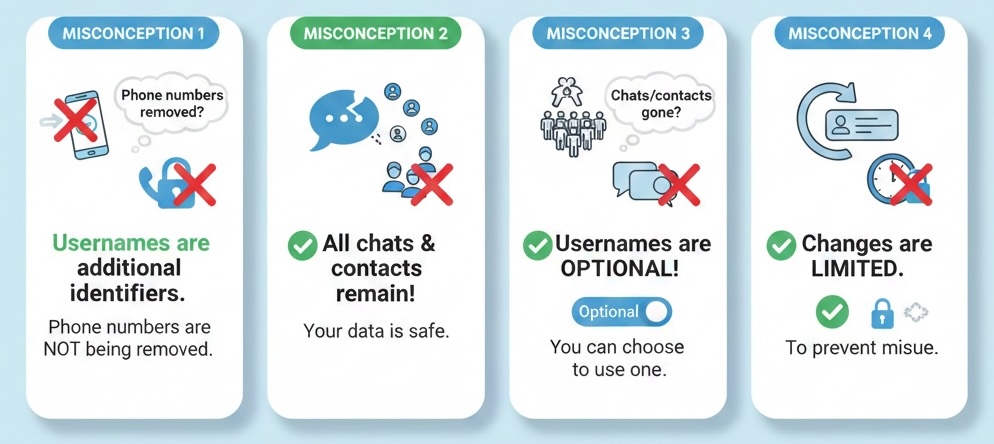
Misconception 1: Phone numbers are being removed from WhatsApp.
According to WhatsApp, phone numbers are not being removed entirely. WhatsApp will still require a phone number for account registration, verification, and security purposes. Usernames add an additional way to connect and ensure privacy, not to replace phone numbers.
Misconception 2: My existing chats or contacts will disappear.
All existing chat history, contacts, and conversations will remain completely intact. Introducing usernames does not affect your current messages, contact lists, or backups in any way.
Misconception 3: Everyone will be forced to use a username.
Usernames are expected to be optional, not mandatory. You can continue using WhatsApp exactly as you do today. You can still share your phone number without ever setting up a username, if they choose not to.
Misconception 4: Usernames can be changed freely at any time.
To prevent impersonation, spam, and misuse, WhatsApp will likely limit or control how often usernames can be changed. This helps maintain trust and ensures that usernames remain reliable identifiers. It’s good to refer to WhatsApp’s official channels for their latest policies.
Pro-Tip
WhatsApp Usernames is an additional identifier feature that complements the traditional number-based identifiers. They will help business users share their WhatsApp account more effectively, as a brand, not a contact point.
High-demand usernames may be claimed quickly, creating brand protection issues. To avoid confusion during the transition phase, we recommend updating your username and implementing technical updates with your tools as soon as it’s possible, if necessary. Bear in mind that mixed identifier systems can cause data fragmentation if not handled carefully.